Is Scuba Diving Safe for Beginners?
An honest look at how safety is built into a beginner Discover Scuba Diving session — supervision, training standards, equipment, and what's expected of you.
PADI Discover Scuba Diving · No experience needed
The honest answer
No activity in or on the water is entirely without risk, and scuba diving is no exception. What makes a beginner session reasonably safe is not the absence of risk, but the structure built around it: training standards set by international agencies like PADI, direct supervision, conservative depth and time limits, and equipment that’s checked and maintained by professionals. This page explains how those pieces fit together — not to oversell safety, but so you can make an informed decision.
Supervision and ratios
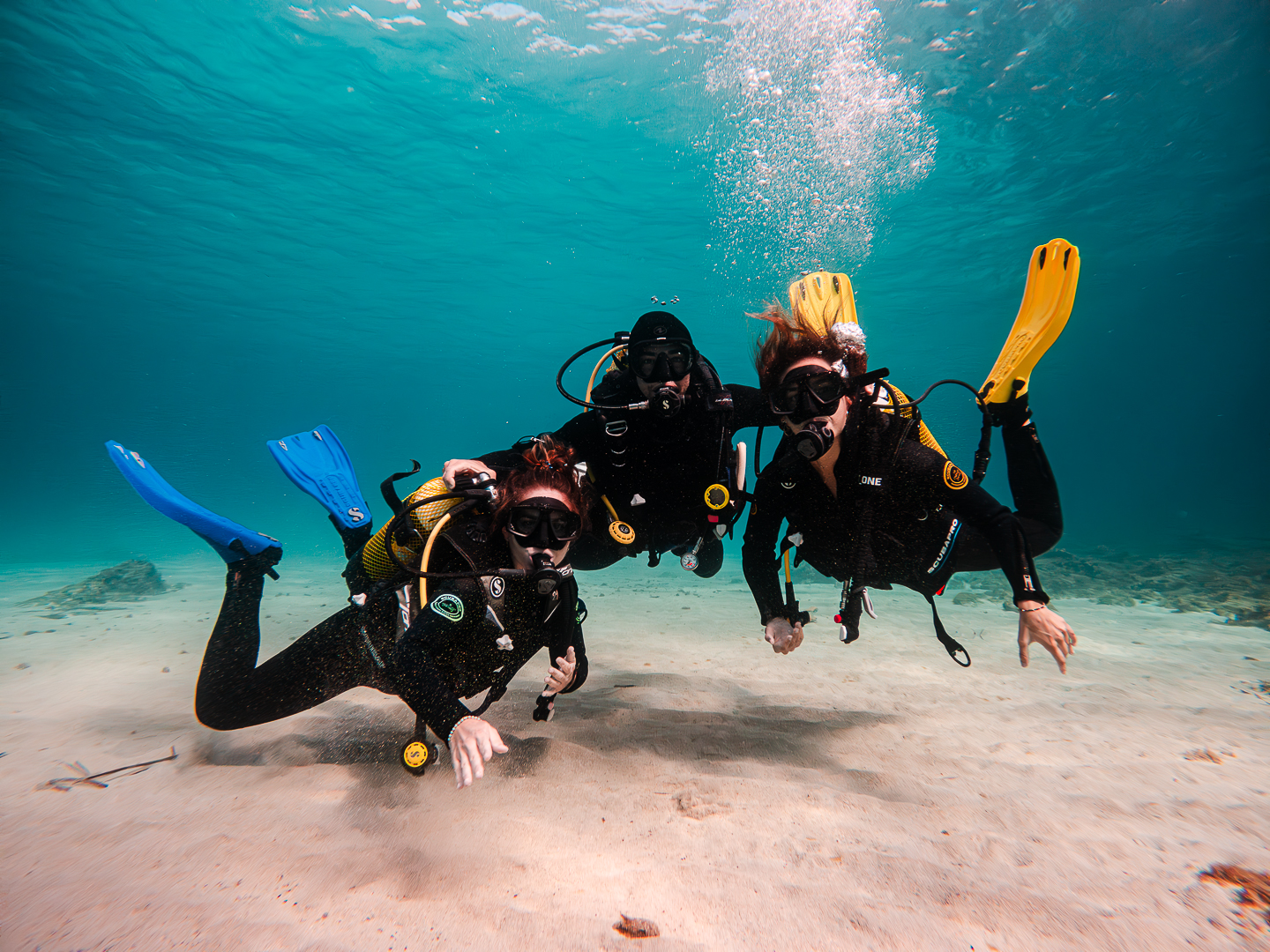
A Discover Scuba Diving session is run at a strict 1:2 instructor-to-participant ratio — meaning one instructor supervises at most two people directly, staying within arm’s reach throughout the dive. This is one of the most significant safety features of the activity: you’re never diving unsupervised, and the instructor is trained to recognise and respond to problems early.
Conservative depths and short durations
Discover Scuba Diving sessions are kept to shallow depths — typically up to around 6–8 metres — and short durations. Shallower depths reduce several of the physiological risks associated with diving (such as decompression considerations) and make it easier to surface quickly if needed.
The medical questionnaire
Before any session, you’ll complete a standard medical questionnaire covering conditions that can affect diving safety — cardiovascular and respiratory conditions, ear and sinus problems, certain medications, and recent surgeries, among others. This isn’t bureaucracy for its own sake: it helps the instructor understand if there’s anything they should be aware of, and flags cases where a doctor’s assessment is sensible before diving.
Disclose honestly
If you’re unsure whether something on the medical form applies to you, ask — either the dive centre or your own doctor can advise. It’s far better to raise a question before diving than to find out it mattered afterwards.
Equipment
Scuba equipment used for beginner sessions is maintained and serviced according to manufacturer and training agency standards. Instructors check your equipment as part of fitting it and again before you enter the water — this is routine, not a sign that something might be wrong.
What’s expected of you
On your side, the main things that contribute to a safe experience are: answering the medical questionnaire honestly, listening carefully during the briefing, communicating with your instructor if something feels uncomfortable (rather than pushing through it), and following the basic rule of breathing continuously and never holding your breath underwater. None of this requires prior experience — it’s exactly what the briefing covers.
For a full walkthrough of what a session looks like step by step, see what to expect on your first dive.
Ready to try it?
Ready to get in the water?
Recommended experience
PADI Discover Scuba Diving
Skualo Porto Cristo · Porto Cristo, Mallorca
No certification · ~2h 30m · Equipment included
- Designed for first-time divers
- No certification needed
- PADI professional supervision
- Strict 1:2 instructor ratio
- Full scuba equipment included
- Based in Porto Cristo
Opens Skualo’s official website in a new tab.
FAQ
Frequently asked questions
Is scuba diving dangerous?
Like many activities involving water, heights, or speed, scuba diving carries inherent risk — but the structure around beginner sessions (training, supervision, equipment checks, conservative depths) is specifically designed to manage that risk. For most healthy adults, a well-run Discover Scuba Diving session is a low-risk way to try the activity.
What medical conditions might prevent me from diving?
Conditions affecting the heart, lungs, ears/sinuses, or certain medications can be relevant — this is exactly what the medical questionnaire is designed to identify. If you have a condition listed on the form, it doesn't necessarily mean you can't dive, but you may need a doctor's sign-off first. We'd always recommend disclosing honestly rather than guessing.
Can children try diving?
Minimum age requirements for Discover Scuba Diving are set by the training agency (PADI's minimum is generally 10 years old) and may be subject to additional conditions set by the dive centre. Check directly with the dive centre for their specific policy.
What if I'm not a confident swimmer?
Some baseline comfort in water is expected, but you don't need to be a strong swimmer for Discover Scuba Diving — the activity itself doesn't require swimming any distance. If you have concerns, it's worth discussing them with the dive centre before booking.
Is it safe to dive if I have a cold or blocked sinuses?
Generally, no — diving with congestion can make it difficult or painful to equalise pressure in your ears and sinuses, and can in some cases lead to injury. If you're feeling unwell on the day, it's best to speak to the dive centre about rescheduling rather than push through.
Continue reading
Related guides
Your First Dive: What to Expect
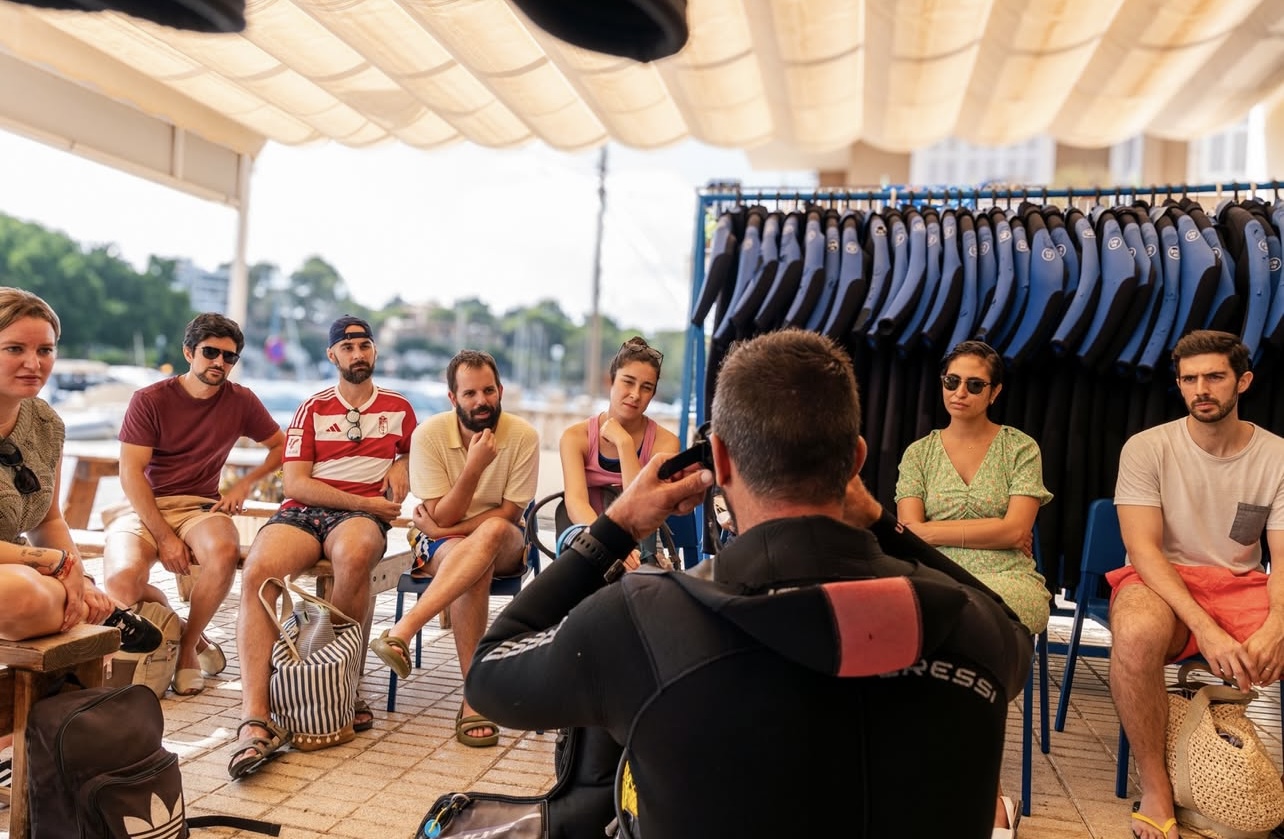
A step-by-step look at what happens during a Discover Scuba Diving session in Porto Cristo, from the briefing to your first breaths underwater.
Try Scuba Diving
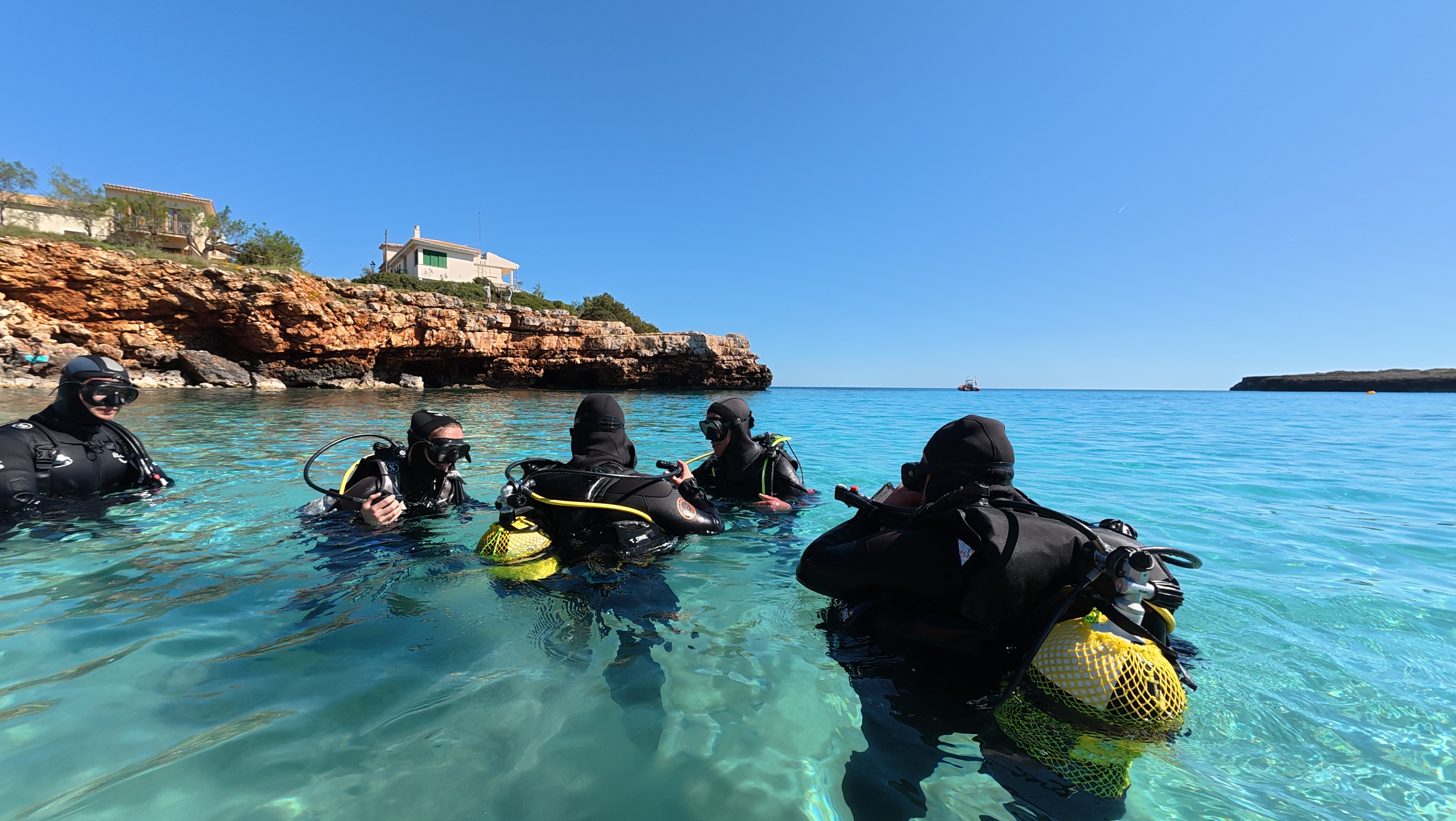
Curious about breathing underwater for the first time? Here's how Discover Scuba Diving works in Porto Cristo, who it's for, and what a typical session looks like.
What to Bring
A practical packing checklist for your scuba diving day in Porto Cristo, whether you're trying it for the first time or diving as a certified diver.