Dive Sites Around Porto Cristo
A look at the type of underwater terrain found along the coast near Porto Cristo — from shallow reef plateaus to rocky walls and the cavern systems the east coast is known for.
The geological character of the east coast
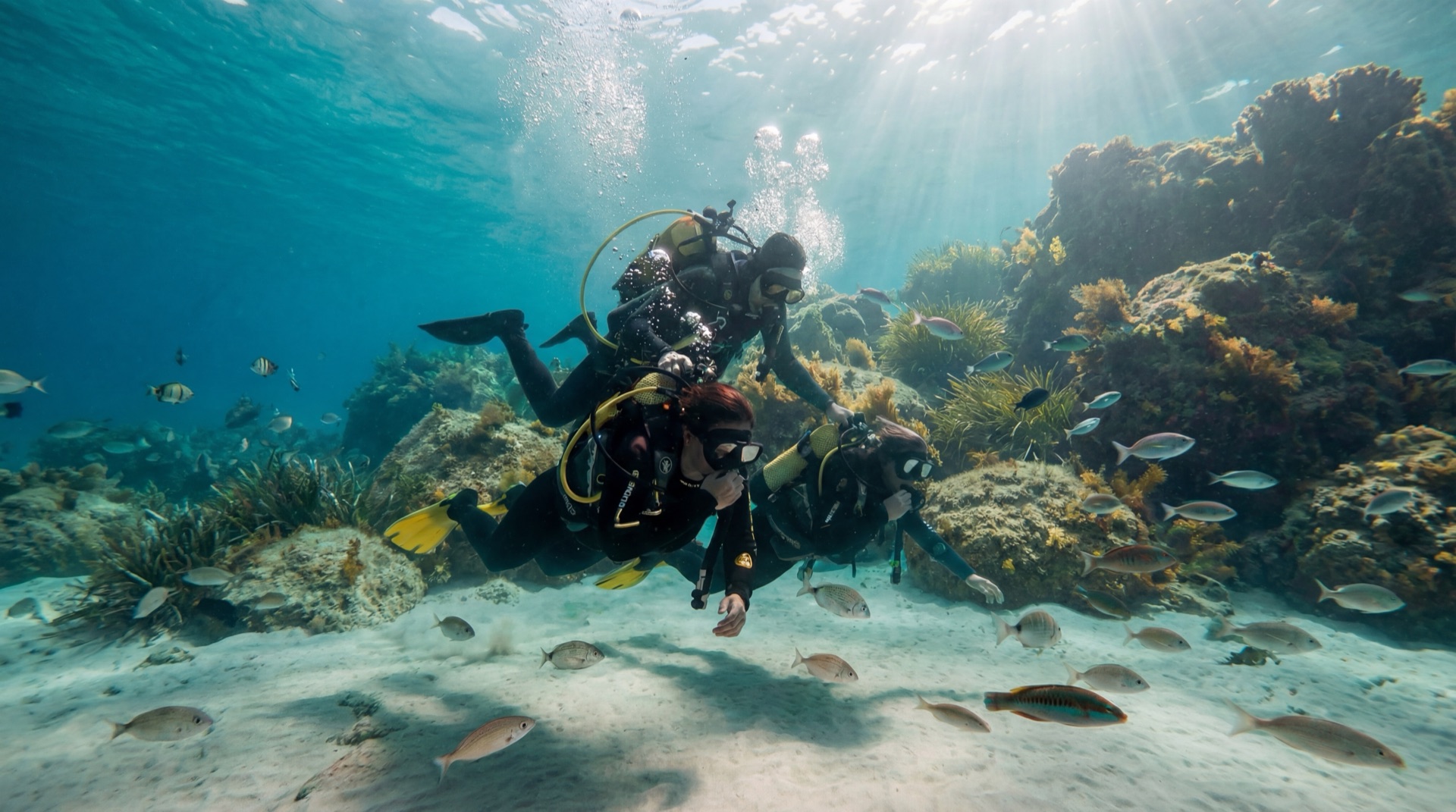
The coastline around Porto Cristo is built on limestone, the same rock that forms the Coves del Drac inland. At sea, this geology produces a broken, textured underwater landscape rather than a flat sandy bottom: rocky ridges, boulder fields, ledges, swim-throughs and — in places — small caverns and arches carved by the sea over a very long time.
Exactly which features a given dive includes depends on the site chosen on the day, which in turn depends on conditions and the group’s certification level. The categories below describe the kind of terrain you might encounter along this stretch of coast, rather than a fixed list of named sites to request.
Shallow reef plateaus
Closer to shore and in many of the coves, the seabed often levels out into shallow rocky plateaus mixed with patches of Posidonia oceanica seagrass. These areas tend to be well-lit, with a good amount of small marine life — useful both for newer divers building confidence and as a warm-up or second dive for more experienced groups.
Rocky walls and ledges
Further from shore, the terrain often steps down into walls and ledges, where the rock face itself becomes the main feature of the dive. These sites can suit a range of certification levels depending on depth, and often hold larger fish species that prefer structure to hide near.
Caverns, arches and swim-throughs
This is the feature the east coast is best known for among certified divers: pockets of the limestone coastline have been eroded into caverns, short tunnels and natural arches. Where conditions, visibility and the group’s experience allow, these can be visited as part of a certified diving trip — they’re one of the clearest ways this coast differs from the sandy-bottomed bays found elsewhere on the island.
Not every trip, not every group
Cavern and arch features require good visibility and an experienced guide to visit safely, and aren’t included on every trip. If exploring this kind of terrain is your main reason for diving here, it’s worth mentioning that to the dive centre when you enquire, so they can plan accordingly.
Marine life you might encounter
The mix of rocky reef, walls and seagrass meadow supports a fairly typical Mediterranean range of species: groupers and other reef fish around structure, moray eels in crevices, octopus and various molluscs on the seabed, shoals of smaller fish over the seagrass, and occasionally larger pelagic species such as barracuda passing through open water. As ever, what you actually see depends on the day, the site and a degree of luck.
Ready to explore these sites?
For an overview of how certified trips are organised — group sizes, equipment, and what a typical trip looks like — see certified diving trips from Porto Cristo.
Recommended trips
Certified Diving Trips
Skualo Porto Cristo · Porto Cristo, Mallorca
Boat dives along Mallorca's east coast
- For certified divers
- Boat diving from Porto Cristo
- East Mallorca dive sites
- Caverns and tunnels where conditions allow
- Professional local guides
- Equipment available if needed
Opens Skualo’s official website in a new tab.
FAQ
Frequently asked questions
Are these sites suitable for newly certified Open Water divers?
Many sites along this coast are within typical Open Water depth limits and are suitable for newly certified divers in good conditions. Sites involving cavern penetration, stronger currents, or greater depth are generally better suited to divers with additional training or experience — the dive centre will match the site to the group.
Can divers enter the caverns?
Where caverns or swim-throughs are part of a dive, access depends on visibility, the layout of the feature, and the group's experience and certification. Full cave penetration requiring specialist training is a different activity from recreational cavern dives and isn't something this guide covers.
How is the site chosen for a given trip?
Local guides typically choose the site on the day based on wind direction, sea state, visibility and the group's certification levels. This means the same booking can lead to different sites depending on conditions — which is normal practice for boat diving anywhere.
Is visibility good around Porto Cristo?
Visibility on this coast varies with season, recent weather and the specific site, generally ranging from moderate to very good in calm conditions. For seasonal detail, see our diving conditions guide.
Continue reading
Related guides
Certified Diving Trips
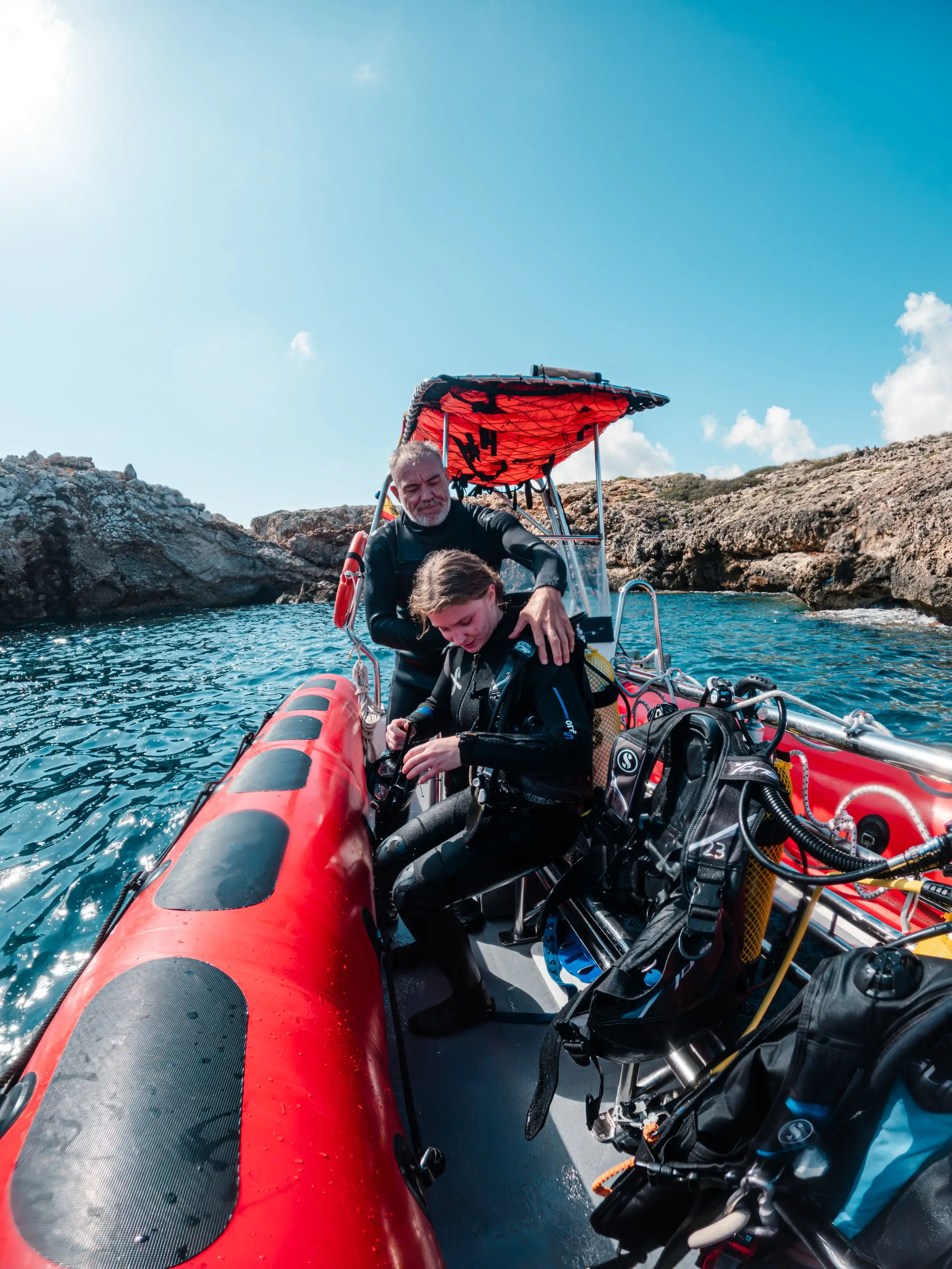
Boat diving from Porto Cristo for certified divers: east coast dive sites, what trips typically involve, and what to expect from local operators.
Diving Conditions
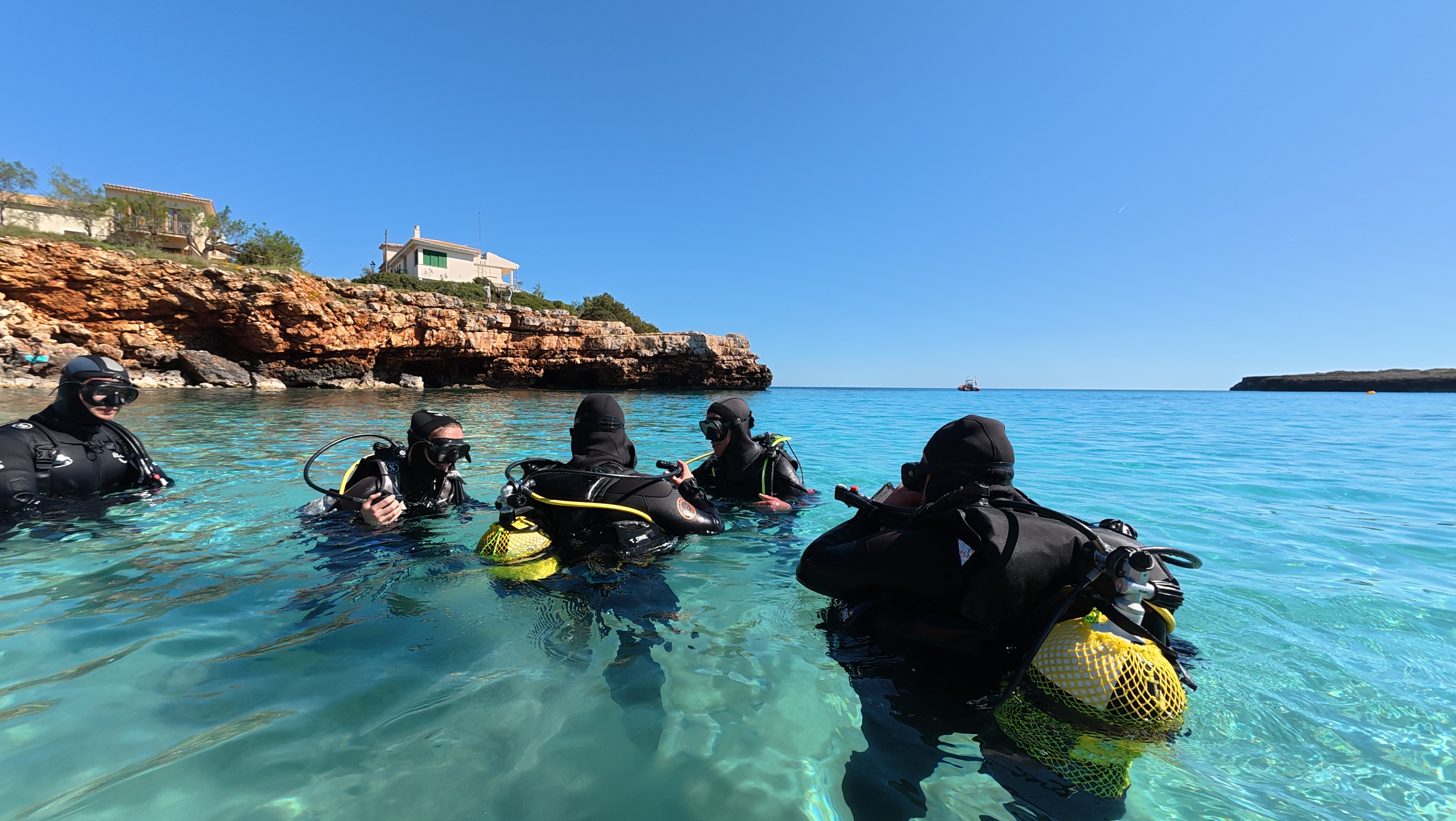
Seasonal water temperatures, typical visibility, wetsuit guidance and how weather affects diving plans around Porto Cristo and the east coast.
East Mallorca Diving Guide
An overview of scuba diving along Mallorca's east coast (the Llevant coastline): coastal geography, conditions, marine life and how Porto Cristo fits in.