What to Expect on Your First Scuba Dive
A step-by-step look at what actually happens during a Discover Scuba Diving session — from the moment you arrive to your first breaths underwater.
PADI Discover Scuba Diving · No experience needed
Before you arrive
Before your session, you’ll typically be asked to fill in a short medical questionnaire covering things like heart and lung conditions, recent surgeries and medications. This is standard practice for any PADI Discover Scuba Diving session, anywhere in the world — it’s how the dive centre confirms you’re fit to dive, not a formality to worry about. If anything on the form applies to you, the dive centre or a doctor can advise whether a medical sign-off is needed before you dive.
The briefing
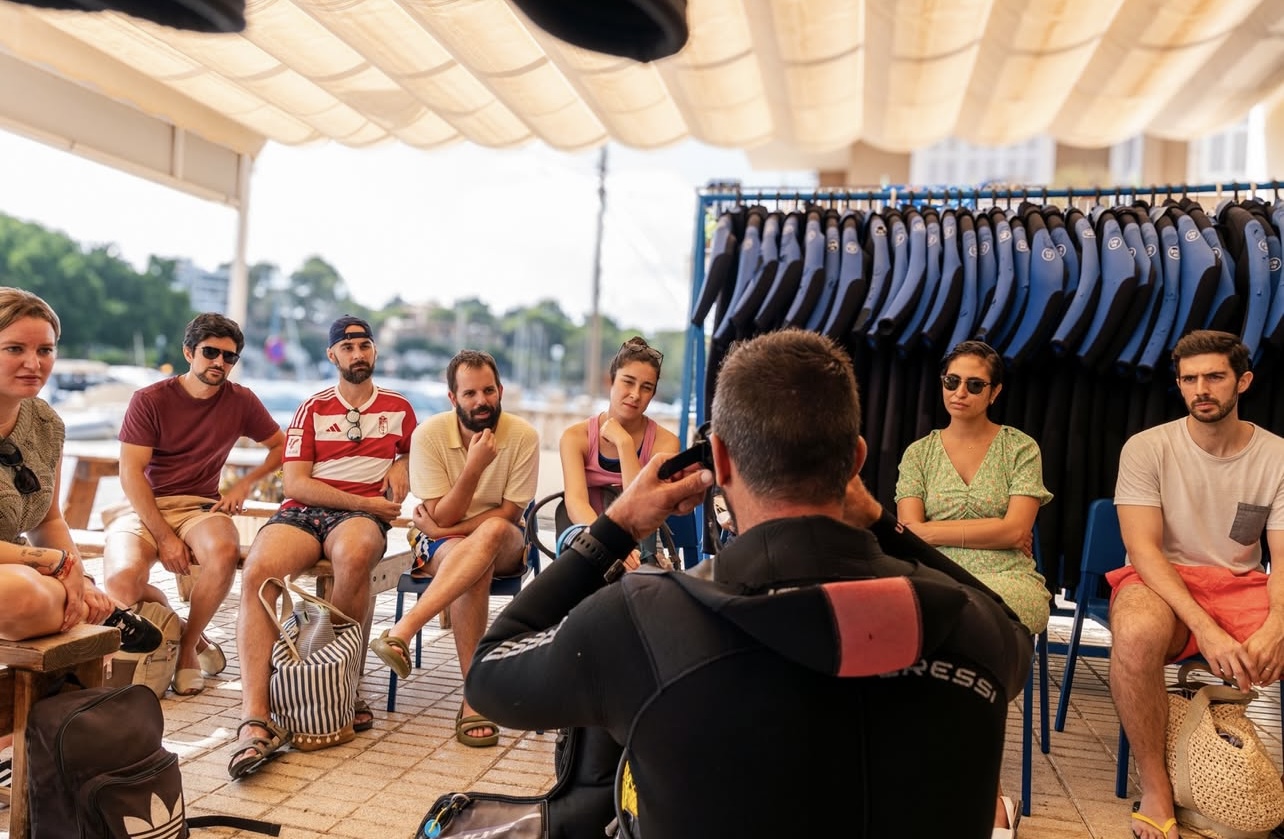
On arrival, an instructor will talk you through the basics: how the equipment works, how to breathe underwater (slowly and continuously, never holding your breath), how to equalise the pressure in your ears as you descend, and a small set of hand signals for things like “OK,” “something’s wrong,” and “let’s go up.” This usually takes place on land or on the boat, before you get in the water.
Gearing up
Next comes fitting your equipment: a wetsuit (sized to you), a buoyancy control device (BCD) with the air tank attached, a regulator (the mouthpiece you breathe from), a mask and fins, and weights to help you stay neutrally buoyant underwater. Your instructor will help you put everything on correctly — there’s no need to have done this before.
Confined water: getting comfortable
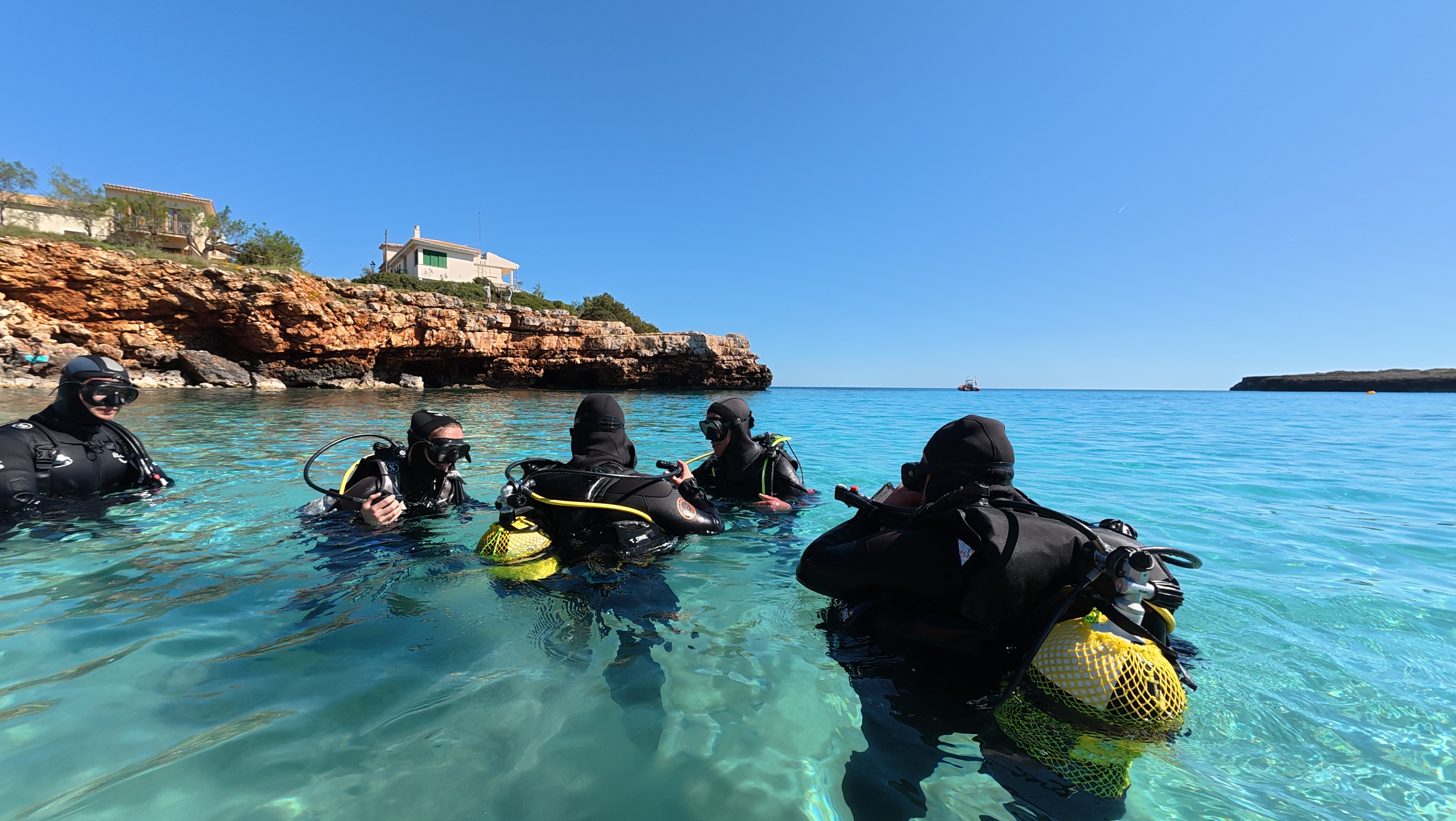
Most sessions begin in shallow water — often just a metre or two deep — where you can stand up if needed. Here, your instructor will run through a few basic skills with you: breathing through the regulator with your face in the water, clearing water from your mask, and getting used to the feeling of being weighted and buoyant at the same time. This step is about building comfort before heading anywhere deeper.
The dive itself
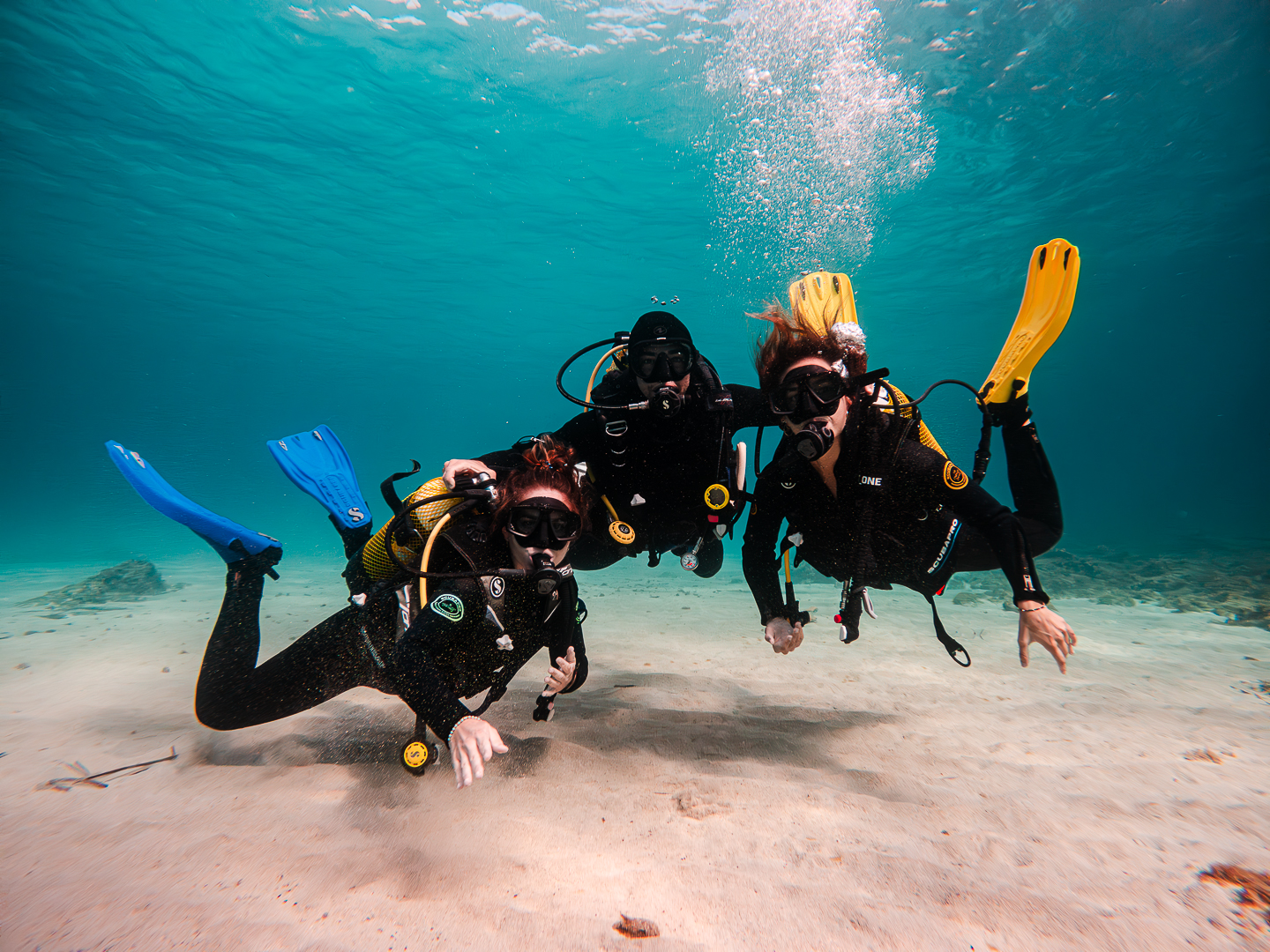
Once you’re comfortable, you’ll descend gradually to a shallow depth — typically up to around 6–8 metres for a Discover Scuba Diving session — alongside your instructor, who stays within arm’s reach throughout. From here, it’s simply a matter of breathing normally and taking in the surroundings: rocky terrain, seagrass, fish, and the strange, quiet sensation of being weightless underwater. Most people describe the first few breaths underwater as the strangest part — and then, very quickly, completely normal.
After the dive
Back on the surface, you’ll remove your equipment, dry off, and typically have a chance to talk through the experience with your instructor — including, for many people, whether they’d want to take it further with a full certification course. There’s no obligation either way.
Ready to book?
Ready to get in the water?
Recommended experience
PADI Discover Scuba Diving
Skualo Porto Cristo · Porto Cristo, Mallorca
No certification · ~2h 30m · Equipment included
- Designed for first-time divers
- No certification needed
- PADI professional supervision
- Strict 1:2 instructor ratio
- Full scuba equipment included
- Based in Porto Cristo
Opens Skualo’s official website in a new tab.
FAQ
Frequently asked questions
Will I have to swim far?
No. A Discover Scuba Diving session stays close to the boat or shore entry point, in shallow water, with an instructor alongside you the whole time. There's no expectation of swimming any distance.
What if I panic underwater?
Instructors are trained to recognise signs of discomfort early and will slow down, pause, or surface with you if needed. The 1:2 ratio means you have direct, individual attention throughout — it's normal to feel a little nervous beforehand, and instructors are used to that.
Can I wear glasses or contact lenses?
Contact lenses are generally fine. For glasses wearers, prescription mask inserts may be available — it's worth asking the dive centre in advance if this matters to you.
What if my ears hurt during the descent?
Ear discomfort during descent is usually due to pressure equalisation, which your instructor will teach you how to manage during the briefing (a gentle pinch-and-blow technique). If it doesn't clear, you simply pause or ascend slightly until it does — there's no need to push through pain.
Continue reading
Related guides
Try Scuba Diving
Curious about breathing underwater for the first time? Here's how Discover Scuba Diving works in Porto Cristo, who it's for, and what a typical session looks like.
Is It Safe for Beginners?
An honest look at how safety is managed during a beginner Discover Scuba Diving experience, including supervision ratios, training and medical considerations.
What to Bring
A practical packing checklist for your scuba diving day in Porto Cristo, whether you're trying it for the first time or diving as a certified diver.